
Mind at 150: A Look Back at the First Issue
This series looks at research from years past. I survey a handful of books and articles in a particular year from math, economics, philosophy, international relations, and other interesting topics. Some are well known, others have been forgotten, and still others were never read at the time.
Mind is a premier journal of philosophy, publishing articles on epistemology, metaphysics, and more, and has been aligned with the analytic tradition throughout most of its history. Mind was founded in 1876 by the philosopher and psychologist Alexander Bain as the first British academic journal devoted to philosophy and matters of the mind (the Journal of Speculative Philosophy from the St. Louis Hegelians first appeared in 1867). From the start, Mind was jam-packed with articles from eminent philosophers, psychologists, and other Victorian intellectuals. It published some heavy hitters from the twentieth century, including Bertrand Russell’s On Denoting (1905), which set the stage for the logical analysis of language, and Alan Turing’s Computing Machinery and Intelligence (1950), which introduced the Turing Test. Over the past fifty years, articles from Mind have regularly appeared in the Philosopher’s Annual, a yearly compilation of the “best” new articles in philosophy.
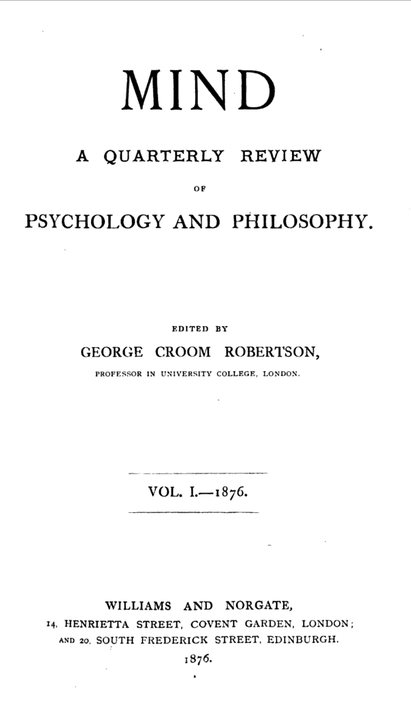
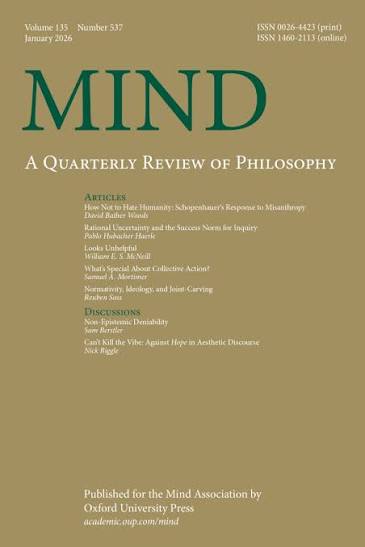
Mind emerged during a pivot from the generalist intellectual culture of the mid-Victorian era to the rising professionalization of modern academic disciplines. Prior to its founding, major British philosophical and early psychological debates were largely waged in the pages of high-brow, wide-audience periodicals like the Fortnightly Review and the Contemporary Review, which catered to an educated public rather than a specialized scholarly silo. At the same time, the 1870s saw the rapid splintering of natural philosophy into technical publications like Nature (1869) and Brain (1878), which formalized distinct scientific fields around methodological traditions and institutional focus. Mind bridged this gap by carving out the first dedicated, specialized venue strictly for mental philosophy, demanding the technical precision of the newly emerging scientific journals while offering a forum for debates over consciousness, epistemology, and ethics that had previously filled the generalist magazines.
First Issue
The first issue of Mind is a mixed bag. We begin with some prefatory words from the editor, George Croom Robertson, which delineates the boundaries of the journal around the study of the mind with the goal of forging a science of the mental. This issue contains a mix of psychology and philosophy articles. The former are more physiological and feel close to what one might read in Nature. The latter would largely be at home in the Fortnightly Review. Despite its lack of voice, the first issue of Mind is an interesting snapshot of the state of philosophy and psychology in the 1870s from an impressive roster of contributors. Below, I survey each of the articles in this inaugural issue, which you can read in full via the Internet Archive.
Physiological Psychology in Germany
James Sully
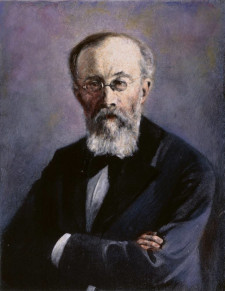
The study of the mind in mid-nineteenth century Germany was largely dominated by the metaphysical approach, e.g., following Kant and Herbart. Wilhelm Wundt’s work in the latter half of the century brought the methods of laboratory science to bear on psychology. This article surveys and provides context for Wundt’s Principles of Physiological Psychology (1874), which introduced experimental ideas to a wide audience of researchers.
Wundt’s approach is built around a posited correspondence between mental and physical events such as visual perception and stimulation of the nervous system. By isolating the latter in a laboratory setting, e.g., through measuring reaction times, we can learn how the mind structures these basic sensations and processes. Moreover, by focusing exclusively on measurable phenomena, Wundt sidesteps metaphysical issues lurking in the external world.
Consistency and Real Inference
John Venn
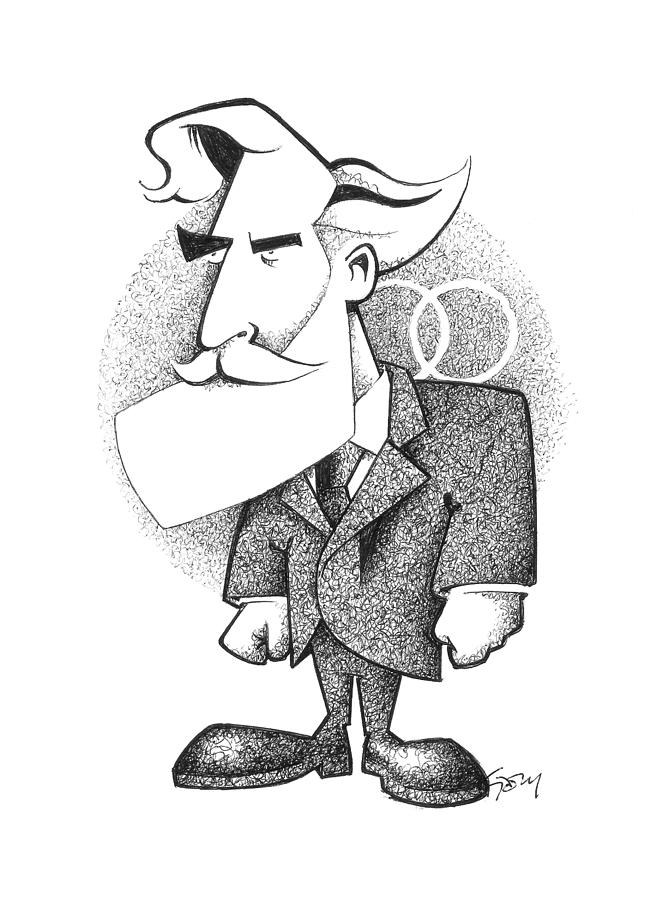
The scope of syllogistic logic sparked debate among nineteenth century philosophers. The conceptualist view holds that logic is the analysis of mental concepts, where the laws of logic are the laws of thought. On this view, propositions make reference only to general notions generated internally by consciousness rather than physical things in the world. Versions of conceptualism were advanced by William Hamilton, Henry Longueville Mansel, and George Boole. While conceptualism sounds similar to the abstract and formal way we treat logic today, we typically think that logical truths are not dependent upon human cognitive capacities.
In contrast, the empiricist or materialist view holds that propositions ultimately make reference to facts about the world. Consider the Socratic syllogism. The minor premise “Socrates is a man” makes reference to a specific fact. The major premise “All men are mortal” is obtained by induction from a collection of specific facts. The conclusion “Socrates is mortal” is an implication of a belief we judge to be true rather than a truth about our concepts of “Socrates”, “man”, and “mortal”. Venn leans toward the latter view, especially since the former struggles to make sense of probability.
Philosophy at Oxford
Mark Pattison
Each issue in the first volume of Mind contains an article surveying the state of philosophy at a major British university. First up is a bit of an odd choice with Oxford, since Pattison argues that the light of philosophy is all but extinguished at this venerable institution.
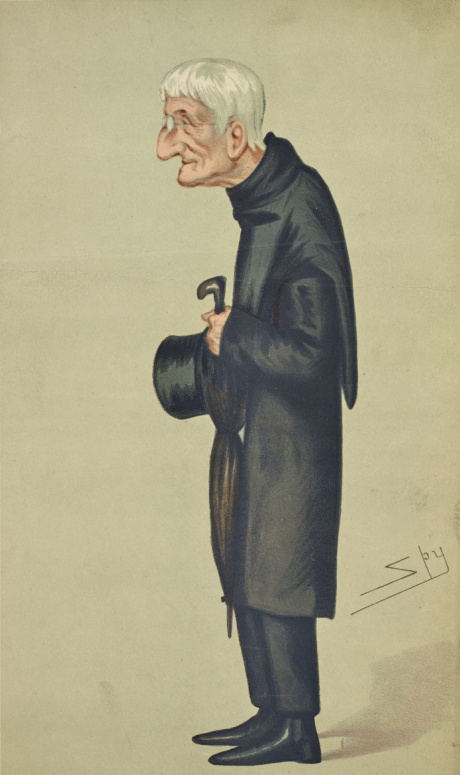
from Vanity Fair magazine
Throughout the nineteenth century, philosophy at Oxford can be characterized by two themes: theological controversy and Lit Hum examinations. Historically, philosophy and religion have been intimately tied together at Oxford. In the 1830s, an Anglican priest and Fellow of Oriel College, John Newman, argued that the church ought to reestablish its autonomy from the state and return to its ceremonial practices common prior to the reformation. In an interesting twist, Newman would join the Catholic Church in 1845, sapping the philosophical spirit of Oxford in the process.
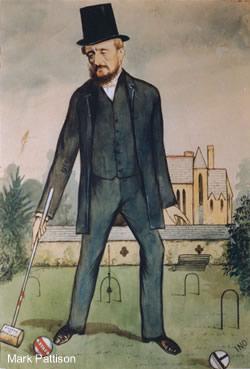
Oxford’s Lit Hum course of study spanned Greek and Latin, ancient history, and philosophy and culminated in highly competitive examinations. This approach lent itself to repetition and narrow study of established works rather than advancing new ideas. Moreover, the best and brightest of pupils and tutors were burning out in service of these examinations, even though the results were quite impressive. Though Pattison does not mention it, one cannot help compare this setting to the research-based Humboldt model thriving at the time.
All of this negativity is negated a bit by surveying some recent work by Oxford dons. Benjamin Jowett translated the dialogues of Plato into English and provided extensive commentary. T. H. Green published a lengthy commentary prefacing a printing of Hume’s Treatise of Human Nature that became foundational to the coming wave of British Idealism. William Wallace published a translation and introduction to Hegel’s Encyclopaedia of the Philosophical Sciences.
The Theory of Evolution in its Application to Practice
Henry Sidgwick
The nineteenth century saw a shift in the conception of nature from a fixed entity to that of an evolving process. This change in outlook challenged maxims, such as those of moral philosophy, which some took to hold across time and space. Joseph Butler and the Scottish Common Sense school, for instance, posit a mental faculty to intuit the rightness or wrongness of actions. Sidgwick argues that this is undermined by biological evolution since there is some time at which humans or human ancestors developed such intuition, and there may be human descendants that possess other sorts of intuitions or moral sense. This is in addition to numerous other difficulties this view faces such as temporal and cross-cultural inconsistencies.
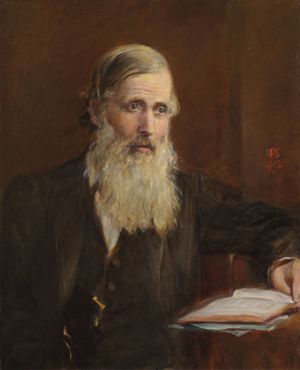
Sidgwick has a peculiar view of moral philosophy as more prescriptive rather than normative, i.e., explaining right action rather than determining whether or not an action is right. Can evolutionary theory determine such a moral philosophy? Herbert Spencer has argued that societies tend to develop toward states of greater happiness, which points to a version of utilitarianism. Sidgwick responds that maximizing happiness frequently runs counter to evolutionary pressures, though he focuses more on survival rather than reproduction.
A more coherent intuitionist view is that we reason about moral matters through sympathy and other such notions. These psychological features evolved gradually whether socially or biologically. While evolutionary theory can inform how these sympathies developed and lead to the survival of our ancestors, Sidgwick argues that it does not provide a rational justification for why we ought to follow these intuitions.
Philosophy and Science
Shadworth Hodgson
The 1870s saw no shortage of analyses mapping the terrains of science and religion, especially where they were at loggerheads. Hodgson’s project, which spans the first three issues in the first volume of Mind, is to delineate science from philosophy while retaining a substantive role for the latter. One view, which Hodgson calls English Positivism, holds that philosophy consists of preliminary groundwork and its problems are those that have not yet become sciences. A less diminutive view, Comtean Positivism, sees the role of philosophy as wrangling scientific theories.
It is possible so to draw the line between them that nothing remains for philosophy but the preliminary guesses at truth which men have made before striking in at the true methods of discovery, which true methods with their results are science, and supersede the old mistakes which are philosophy.
Hodgson advances a far more expansive role for philosophy. The sciences study objective phenomena: the mass of an object, the market price of a good, the structure of a chemical bond. What’s left out of this view of science is subjectivity or how one experiences these phenomena, which forms the domain of philosophy. Taking an expansive view of existence, Hodgson sneaks in much of traditional metaphysics as the interaction between the objective and the subjective.
The Comparative Psychology of Man
Herbert Spencer
In the latter half of the nineteenth century, Herbert Spencer engaged in a wide-ranging project to show that evolution (or his understanding of it) is a law of nature governing the mind and society, the material and the metaphysical. This article is a call-to-action noticing that the comparative study of people across cultures is a fruitful avenue to better understanding the mental and the social.
Roughly, Spencer views evolution as a progressive change from the homogeneous to the heterogeneous, sharing aspects with Comte, Lamarck, and Darwin. Not only do minds evolve through cognitive ability and capacity for expression, but there’s a complex interplay between individuals and society. The structure of individual minds puts limits on the structure of society, and changes to the social precipitate changes in the individual. Obviously, a lot of Spencer’s ideas lack empirical support and are justly open to criticism.
The Early Life of James Mill
Alexander Bain

from the Online Library of Liberty
James Mill was an influential philosopher and political economist in early nineteenth-century Britain. He was born in rural Scotland and recognized for his mental prowess early on. Mill attended Montrose Academy for secondary school until entering the University of Edinburgh in the 1780s. Though taking orders with the Church of Scotland following his studies, Mill was not cut out to be a preacher, being perceived as obscure. After shutting that door, he spent over a decade as a tutor, continuing his studies on philosophy and political economy while making friends in high places.
This sketch is part of Bain’s work on a biography of James Mill, later published in 1882. The most interesting part is seeing what Mill was reading from the library during his Divinity studies in Edinburgh. These range from recent classics such as Adam Ferguson’s Essay on the History of Civil Society (1767), Rousseau’s Emile (1762), and Adam Smith’s The Theory of Moral Sentiments (1759) to old favorites such as Plato’s dialogues.
Notes from the Editors
Robertson discusses an experiment described by Aristotle where one contorts their fingers, causing an unusual sensation that’s both closer and farther away from the finger tip, indicating a spatial component to perception by touch. Despite my best efforts, I could not reproduce the hand manipulation.
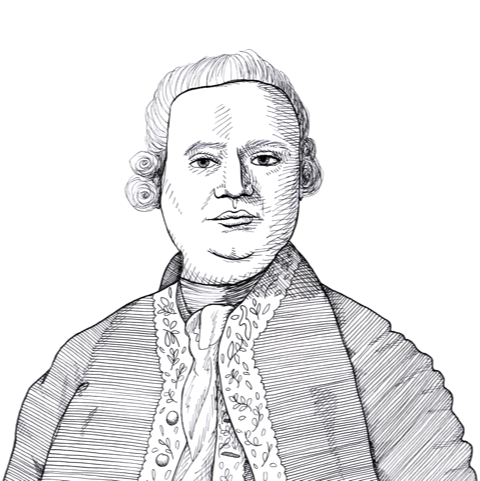
from the Online Library of Liberty
Bain makes clear two views on the uniformity of nature. Following Hume’s conception, Bain holds that the uniformity of nature is an assumption necessary to inductive inference. In his Problems of Life and Mind, in contrast, George Henry Lewes argues that the uniformity of nature is a tautology.
The Syllabus of Plane Geometry is a text published by the Association for the Improvement of Geometrical Teaching in 1875 as a guide to studying Euclid’s Elements. Robertson takes issue with the guide’s preface on logic, which details the contrapositive, converse, and inverse for a propositional statement. In particular, Robertson takes issue with the idea that a proposition and its contrapositive are equivalent, which seems not to hold on his view of predicate logic due to technicalities with quantification.
 Buy me a coffee